
Volume 1, Issue 6
An Inside Look at Audacity
When I’m producing music, I think of my tools as a technology pipeline or a toolchain. It usually starts with LogicPro and all the associated plugins and agents.
But once you have a final track, there are plenty of other tools that come into play. If I am distributing a file, it is typically through a service and almost never directly through email. So that means uploading files to Dropbox, Songbox, Taxi, and other online services.
Those all handle metadata differently (if at all) and I may need different file formats. I also need to watermark and apply C2PA bindings to all the assets.
The point here is that I frequently need to do something to a file – change the format, slice out a small section, insert metadata – and LogicPro is either not capable or overqualified for the job. In those cases, I often reach for Audacity. So you can imagine my delight when this video from Martin Keary, aka Tantacrul, showed up in my feed. In it, he shares the feedback they’ve gotten on the product and very transparently discusses the state of the codebase and what and how they are going to build things going forward. He has a unique voice with a deep understanding of software development and architecture including user experience design, but he’s also a musician with his own toolkit for recording, scoring, editing, and this adds to that unique perspective. For those of you with tech backgrounds, you will hear a lot of familiar stories about tech debt, regression paralysis, and the challenge of planning major replumbing kinds of work. You can watch the full video, which is almost an hour, or condense it in your favorite way, but it’s a somewhat rare chance to hear the real state of the technology for a tool that I’m willing to bet most producers and engineers have and use. The first fifteen minutes or so tell the story of how they got to a very tough place, that’s definitely worth a listen.
And Martin, if you are reading this, I’d love to talk to you about building C2PA into a future version…
Update on Legal Stuff
We’ve written about lawsuits targeting Suno and Udio as well as others. Most of these are getting pretty heavy coverage, but one recent event in the Anthropic case was concerning. Concord Music tried to ammend the complaint against Anthropic to include their use of Bittorrent to illegally acquire the works used for training. This motion was denied, putting the case back in the sole realm of whether it was fair use. I am not a lawyer, and this was a procedural denial, but it still smarts a little to think that in order to “fair use” the content, you needed to steal it, but the stealing part turns out to be unenforceable here.
In any event, this is one of 56 lawsuits related to content owners litigating against AI companies. Here’s a nice summary of them: AI copyright suits Status report.
Lars Murray’s Friends’ Axes…
Regular followers of our social media know that we are big fans of Lars Murray and the Unlimited Supply Daily podcast. In a fantastic piece this week, he brings Benji Rogers into his “Axe to grind” series, and if you make and/or license music, you should really listen. Benji outlines what a good license in the music industry looks like today:
1. There must be a training fee, which is paid when an AI trains on your work.
2. You must be paid proportional to how much your work is used by the specific thing that the AI makes, which he calls an attribution fee.
3. If the output of the AI makes money, you should be paid for that too.
And perhaps more importantly, creators will never have the same amount of power that we have now, so now is the time to advocate for these rights! It starts at 3:34, but you can use this direct link. Thanks, Lars!
Pixel 10 Goodness overlooked…or, what’s up with Nikon this month?
There aren’t any updates on the Nikon C2PA certificate revocation story that I’ve seen, but in the hubbub of that story, I think I forgot to mention that the Pixel 10 is out with native C2PA and it looks awesome!
PMC is a wrap
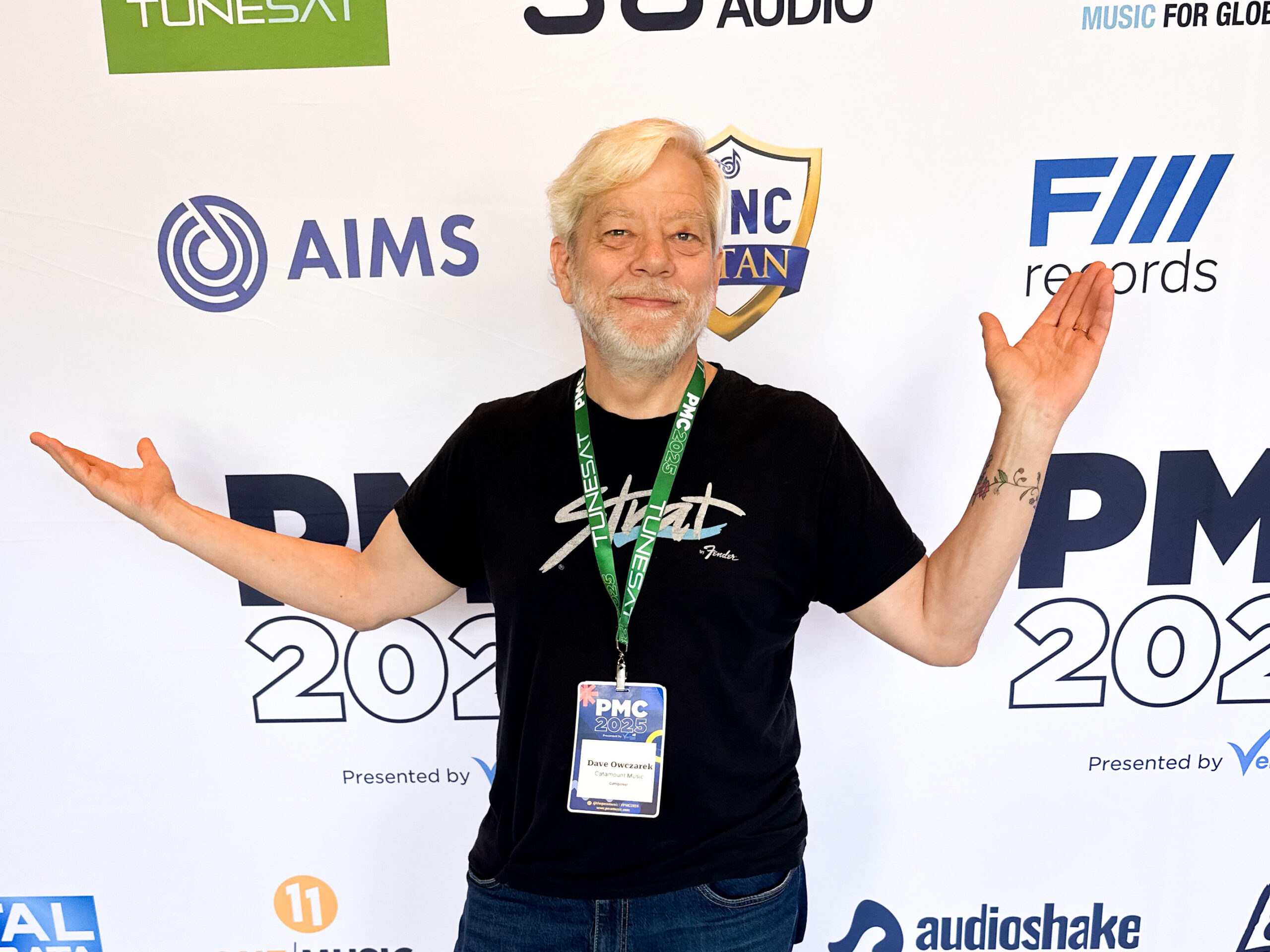
We attended our first production music conference (PMC) last week and it was a big learning experience. This conference is focused on people writing production music and songs for TV and streaming. Pretty classic sync music stuff. The conference differs from TAXI Road Rally in that the social opportunities are more targeted and the demographics seem to be people who are placing more than pitching music as opposed to Taxi. At Taxi, it feels like most people are either still trying to get the elusive “forward” or are pitching more than placing. At Taxi, if you sit in the lobby bar, you will end up in conversation all night. It is a very social crew. At the PMC, there is definitely a social scene, but it’s more contained. There’s less random people meeting each other and more discussions around larger groups of peers. This makes sense due to a few dynamics. The most important is that Taxi is free, which makes it very easy to attend, where as PMC has an entry fee. The PMC venues are more expensive as well, being located next to Universal City as opposed to LAX. And the content is very different. The PMC has lots of large networking opportunities, open networking opportunities, like long breakfasts, lunches, mixers. Taxi tends to have more mentoring or instructional opportunities, like cue review lunch and panels that review songs submitted through Taxi. Taxi also has open mics and jam rooms, so it’s definitely a different vibe.
PMC also has the Mark awards, which I won’t cover here, but honors the best music and best people in the production music community.
Best Session
The PMC schedule is focused on high value topics important to working composers. One, though, was a standout. Imagine you are hired by a major film company to oversee the orchestration and recording of an original score for an A-list move. This will culminate in a recording session in Los Angeles in a top-tier studio with a full orchestra, costing $100k a day or so. No pressure. The Orchestrator Workshop, from Penka Kouneva , was an incredibly captivating look into the role of the orchestrator as a conduit between composer and musicians. It was so good – she is so good – that there was a standing ovation at the end of the talk. She went from considering genre, story/brief, and overall tone when composing music to thinking in three dimensions (high/mid/low range, foreground/middleground/background) for depth. She covered specific techniques like “striping” the orchestra, using instrument doublings, and even precise tuning techniques. But it was her obvious drive to educate – to impart as much actionable knowledge in the time she had – that was truly inspiring. This extended to the point that she cut the presentation short so she could answer as many audience questions in the time she had. What a fantastic teacher and stand-out session!
Networking
I ran into Dave & Shannon Kropf, of 52Cues. I am a member of this community, but I have not be very active in the last six months as I’ve been consumed by music technology, which fills me with regret. It is a wonderful and supportive community of musicians, and they had a meet-up at the PMC which I unfortunately missed. I ran into Dave & Shannon after this though, and still managed to have a wonderful conversation and thank them for both building a community and putting out amazingly helpful content. They have a fantastic recap of the conference here on their channel and it’s worth a watch. In particular, Shannon talks about some of the social aspects of attending a conference, and how to cope with social anxiety. It’s a really open and honest discussion, and I identified with many of the things that she talked about, including feeling like I have a completely different “tribe” in the post-post Covid times.
I also ran into Jeff Hargrove of Blessed Boy Music, who I have been watching for awhile due to his skills in the sports music area. Seriously, you should check out his YouTube channel. He has a lot of content about production music cues, particularly sports, epic rock, and other kinds of anthemic sports music, which I have been dabbling a lot in lately.
There are two tech companies that I will highlight from PMC: Reelcrafter and TrackTrove.ai. Let’s take a quick look at what these two companies do.
TrackTrove.ai
TrackTrove is setting up an online ecosystem where composers, publishers, and music supervisors can all use AI to sort through what is available and what is needed. It’s an interesting idea, and I am aware of at least one similar effort where there is a group trying to build an integrated list of all the production sync listings so that there is a one stop shop for people with track to license to go to find opportunities. It is very early days, though, for trackTrove, and they are still configuring their first flights of customers on a limited basis. We’re on the wait list, but I’m quite interested, because this service allows for your catalog to attract new opportunities without having source them directly, which is a big problem breaking into production music.
Reelcrafter
I became aware of ReelCrafter when they emerged as an alternative to SoundCloud after the terms of service kerfluffle earlier this year. ReelCrafter is frequently mentioned as pitch platform for artists that are concerned about having their music used for QA training. They do not allow it and are very passionate about artists rights. That comes straight from the company – I managed to have a quick conversation with Sam and Sara at their booth. You know you’ve met your people when, apropos of nothing, they bring up wanting to make metadata impermeable. Anyway, They have just released a new version and announced a collaboration with a 52Cues program called Sync Accelerator, which is a program that helps composers put together and pitched their first production music album. We might just have to go through that program here at Catamount Music, as this is the intersection of two extremely good organizations!
AI and MusicTech @ PMC
I like to find out where everyone is at with respect to AI training, artist rights, and music technology at these things. At PMC, I definitely heard mixed messages. In general, the vibe at the conference was to compose organically and use AI where it makes sense. In a number of sessions, I heard folks sat that AI was not going to take jobs from composers, and to continue to compose organically without AI. Personally, I think it is risky to not learn about and incorporate AI into your workflow. But there seems to be an unwillingness among some to consider that given enough time and effort, AI music will actually be good. AI performances will challenge human performances, possibly becoming less perfect in support of that. AI performers will become emotional, expressive, and have great control over their own dynamics. AI compositions will become more sophisticated and compelling. I don’t think this is something to fear. I also believe there will always be a place for an amazing performance, and humans are uniquely qualified to deliver amazing performances.
But I really disagree with any advice that tells people to not worry about AI because it may never have some of the capabilities we value in human composers. It will, and we should all be ready for it. In fact, we should be aggressively adopting AI where it makes sense and doesn’t compromise our copyright, ethics, or morality, in my opinion. But I did hear a number of people either dismiss the concern about AI music taking jobs away, or espouse a strategy of ignorance disguised as a rationale for why humans will always be better and more valued.
I also really wanted to talk about C2PA, content provenance, watermarks, and so on. And I have to tell you, in that crowd, I got a lot of glazed eyes. Nobody that I asked had heard about C2PA or even content provenance more generally. But there were definitely people thinking about it. I generally got one of two reactions. On the one hand, once I started talking tech, some folks checked-out pretty quickly. But there were a small group of folks that immediately got interested. Clearly those of us evangelizing C2PA for music need to do more of it.
As a final word, and it pains me to say this, because it’s a great conference and the staff was awesome and supportive, but for a conference that had a lot of music and cue reviews, I thought the sound systems were not up to the task. It was hard to hear many of the speakers, probably because they were all given hand mics and not lavaliers. So they had to remember to hold it up, hold it up in the right place, and then keep it in the same place. It didn’t go well. And when they would play sections of music…it just did not sound good. As someone who has been mixing, mastering, sound treating rooms, and MUSHRA testing, my ears are in pretty good shape. And I assess that they didn’t have either the PA system or the room dynamics to be able to play good audio. My suggestion would be to switch to wireless lavalier mics next year, and have one room for all the sessions that involve audio, and use the right room with the right equipment and some sound treatment.
PMC was great, and it’s a wrap for us this month. Next month will be a big one, with MusicTecktonics and the Taxi Road rally happening in the same week. It’s a music conference two-fer!
Leave a Reply